Hit a Deer on US-95? What to Do in the First Hour
The first hour after a deer strike sets up everything that follows, from your safety to how smoothly the repair goes.
October 12, 2026 · 4 min read
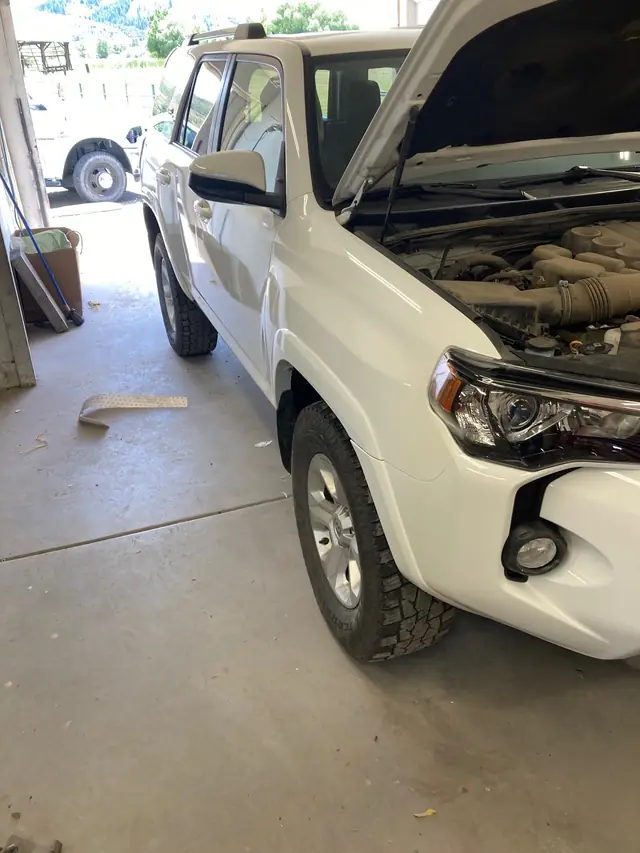
If you drive US-95 through the valley long enough, you will eventually meet a deer. Dusk and dawn are the worst stretches, and autumn is when the animals move the most. Most people never plan for the moment it happens, which is why it helps to read through the steps once, before you need them. What you do in the first hour affects your safety, your claim, and the repair itself.
Make everyone safe first
Pull as far off the road as you can and turn on your hazard lights. If the vehicle will not move and you are on a blind curve or a hill crest, get yourself and your passengers well away from the lane once it is safe to step out. Check everyone in the vehicle. If anyone is hurt, call 911 before you do anything else.
Stay away from the animal. A deer that is down but alive can kick hard and panic quickly. If it is lying in the road and creating a hazard, report it to the authorities rather than moving it yourself. Your truck and your paperwork can wait. Your safety cannot.
Photograph everything before you move anything
Once things are calm, take your phone out and document the scene. Photos taken right away show the damage as it was, before a long drive or a few days of weather change the picture. Good photos also make the conversation with your insurer and your body shop much easier.
- A wide shot of the vehicle where it stopped, showing the road around it
- Close-ups of every damaged area, from a few feet back and from up close
- Anything hanging loose or lying on the road, such as trim, lenses, or plastic pieces
- Fluid on the ground under the engine bay, if there is any
- The animal and the surrounding road, from a safe distance
- Any warning lights on the dash, once the vehicle is on
Call your insurance company
Call your insurer, or open the claim through their app, while the details are fresh. Ask how they classify an animal strike on your policy, because policies differ and the answer shapes what happens next. Ask what they need from you, and whether they want to see the vehicle before repairs start. Write down the claim number, the name of the person you spoke with, and the date.
What hidden damage to look for
A deer is a lot of weight arriving at highway speed, and the damage you see is rarely all the damage there is. One customer who hit a deer with his 2014 Ram 1500 described a bent bumper, a broken piece above it, and damaged undercarriage material. That is a common pattern, and it shows how many parts sit behind one visible dent.
- The bumper and whatever is mounted behind it, since a bumper cover can look nearly fine while the support behind it is bent
- The pieces above the bumper, such as the grille, headlight housings, and the front edge of the hood
- Undercarriage material, meaning the plastic splash shields and panels that sit under the engine bay and protect it from road debris
- The radiator and cooling fan, which sit just behind the grille and can crack or leak after a hit
- Steering and suspension parts, where a hard impact can knock the wheels out of line
- The hood latch and hinges, which can leave the hood sitting uneven
Watch for a vehicle that pulls to one side, a steering wheel that sits off center, a grinding or rattling sound, a coolant smell, or drips under the engine. Any of those is a reason not to keep driving it.
Getting it to the shop
If the vehicle is leaking fluid, overheating, pulling hard, or has anything hanging low, have it towed. A tow costs far less than an engine damaged by driving on a cracked radiator. If it drives normally and the lights are all working, a careful drive to the shop is often fine, but when in doubt, call the shop first and ask.
That same customer with the Ram stopped by the shop the day before dropping off the truck, introduced himself, and showed Brad the damage. That small step is worth copying. It gives the shop a chance to look at the damage in person, talk through the claim, and plan the work. Once the truck was in, the repair was completed ten days after drop off, though every repair differs and depends on the damage and on parts. When the work was done, Brad pointed out that the alignment should be checked. The customer had it corrected the same day and brought that invoice back so it could go to his insurer, Liberty Mutual.
A simple checklist to keep in the glove box
- Hazards on, get off the road, check everyone
- Stay clear of the animal
- Photos of the vehicle, the damage, and the scene
- Call your insurer and write down the claim number
- Tow it if it leaks, overheats, or pulls
- Ask the shop to check alignment and the parts behind the bumper
If you have had a deer strike on US-95 or anywhere around Council, Brad Easley Auto Body handles this kind of repair every season. Read more about how we approach it on our collision repair page at /services/collision-repair, or call the shop at (208) 250-7787 and tell us what happened.
Brad Easley Auto Body, (208) 250-7787
Call (208) 250-7787More articles
Working With Your Insurance After a Collision
A claim feels complicated until you see the usual steps laid out, and a good shop does much of the legwork with you.
Paintless Dent Repair or Repaint: How to Tell
Some dents can be massaged out from behind the panel with the factory paint left alone, and some cannot.