Custom work, Council ID
Auto Customization
Personalize your vehicle with paint, decals and accessories, inside and out.
Chapter 01
Start with what you want the vehicle to say
Customization requests tend to arrive in three families. Some people want color: a different paint on the whole vehicle, a stripe, a two-tone break along the beltline. Some want graphics, which means decals and lettering. And some want accessories, the bolt-on and stick-on pieces that change how a truck or Jeep looks without touching the paint underneath.
A rig that works for a living on US-95 has different needs from a show car. A ranch truck wants something that survives gravel and brush. A weekend Jeep might want something loud. Say which one you are building before anyone picks a swatch, because the answer changes the prep, the finish and what it costs to keep up.
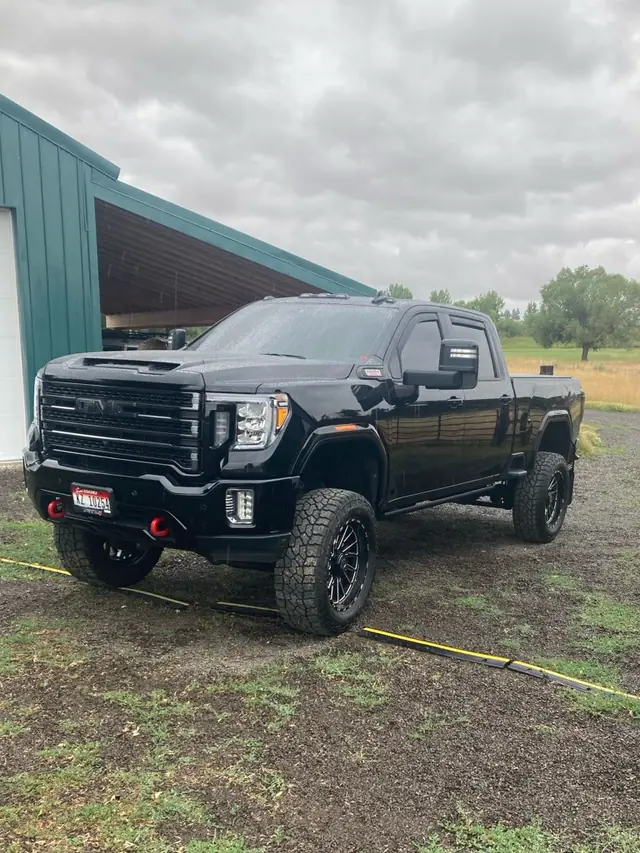
Black lifted GMC Sierra parked by the barn after finishing
Plan on paper before anything gets sprayed
Good custom work is mostly decided before the first coat. That means walking the vehicle and noting every dent, chip and tired panel, because new finish shows old problems more honestly than anything else. It means choosing the color in daylight, outside, since a shade that looks right under shop lights can read very differently under the big Idaho sky.
A small test panel settles arguments that a paint chip cannot. You see how the color moves from sun to shade, and whether the decal layout sits right against the body lines. Brad's shop is a two-man operation, so the person who talks the plan through with you is the person who does the work. Call (208) 250-7787 to start the conversation, or stop by 1926 US-95 in Council.
Chapter 03
Keeping a custom finish looking the way you ordered it
Fresh finish needs patience. Fresh paint wants a stretch without a wash or wax so it can harden fully, and a decal wants time for its adhesive to settle. Ask what the waiting period is for your particular job instead of assuming, and plan the first wash around it.
After that, the rules are plain. Hand wash with a soft mitt, keep the abrasive brushes of an automatic wash away from graphics, and rinse road grime off before it bakes in. Accessories deserve a look at the mounting points now and then, since washboard roads work things loose. If something chips or scuffs along the way, the paint and scratch work is handled in the same bay, so the touch-up matches.
From a Google review: “communicated with me every step of the way”
The rest of the paint booth menu
Custom jobs lean on the same prep and finish work as everyday repairs at Brad Easley Auto Body. Here is where to look next.
- Exterior Auto CustomizationCustom paint jobs, wraps, trim, lighting and unique exterior finishes.See the service
- Vehicle PaintingHigh-quality refinishing with durable coatings and exact color match, from panel resprays to full repaints.See the service
- Paint and Scratch RepairPrecision color matching and refinishing for chips and scratches.See the service