Paint booth, Council ID
Paint and Scratch Repair
Precision color matching and refinishing for chips and scratches.
Chapter 01
A chip, a scratch and a failed clear coat are three different jobs
Not every mark on a panel is the same depth, and the depth decides the repair. A scuff that sits only in the clear layer can sometimes be worked out. A scratch that catches a fingernail has gone through the color and needs paint. A chip that reaches bare metal is the one to take seriously, because steel under open paint rusts, and the rust creeps under the edge of the chip and lifts the paint around it.
Gravel roads around Council and highway miles on US-95 throw stone at the front of a vehicle all year, so hoods, bumpers and the leading edges of fenders collect chips first. They are small enough to ignore for a season and large enough to cost you a panel if you ignore them for five.
Clear coat that has gone cloudy or started to peel is the third case. It cannot be polished back, because the layer that gave the shine is the layer that has failed. That panel needs refinishing, not a rub with compound.
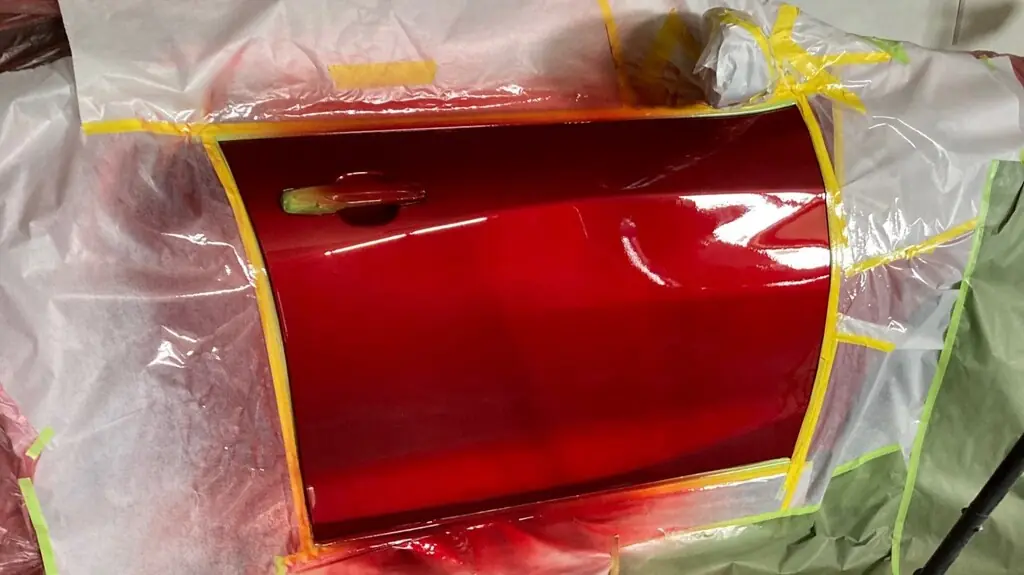
Door panel masked off with fresh red basecoat in the paint booth
The match is made in the sanding and the blending
The damaged spot is feather-sanded until there is no edge left to feel with a fingertip, then primed. Basecoat goes on in thin passes in a color mixed to suit the car as it is now, not as it left the factory, because years of sun move a color, and a code match straight off the door jamb can sit a shade off against an old door.
Clear coat goes over the color, and then the part most people never see: the new color is blended into the neighboring panel so the eye has no line to find. The photo on this page is a door in Brad's booth, masked off with fresh red basecoat on it. Everything outside the repair stays covered, so the only paint that changes is paint that is supposed to.
Chapter 03
How to judge the blend once it is home
Fresh clear coat needs time to cure before it takes soap, wax or a pressure washer. Ask Brad when the panel is ready instead of guessing, and keep it away from automatic car washes until he says it is fine. A repair that is washed too early can pick up marks that were not there when it left the shop.
Judge the match in daylight, not under shop lights. Walk the panel at an angle, look along the edges where the repair meets original paint, and check that metallic flake and depth read the same on both sides. If the repair is part of an insurance claim, the same standard applies, and Brad deals with the insurance company so you are not carrying that part of the job yourself.
From a Google review: “it looks like new again”
Other work done under the same booth light
Vehicle Painting
When the whole panel, or the whole vehicle, needs refinishing instead of a spot repair.
READ THE CRAFT
Bumper Repair
Scuffed and cracked plastic covers get repaired and painted so the color reads the same as the body.
READ THE CRAFT
Paintless Dent Repair
A dent with the paint still intact can come out without any paint work at all.
READ THE CRAFT
See all ten services, meet the two-man team, read the shop blog, or write to Brad through the contact page. Hours at 1926 US-95: Mon-Fri 8:30am-6pm.